August 20, 2026 at 10:50 a.m.
Paying it Forward: Tim Andrews Talks Experience and Retirement
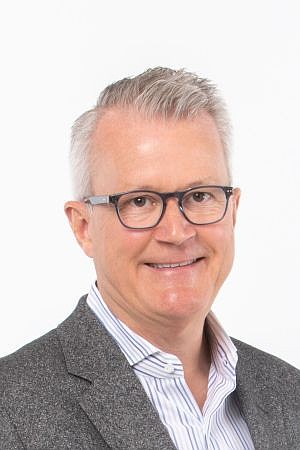

Like life, retirement has its lessons.
When Tim Andrews retired in March 2026 he had a plan. Sort of.
Admitting he won’t be totally settled into this new reality of things for at least 18 to 24 months, Andrews – who is just now about six months retired – recently spoke about what retirement has been like so far and what lies ahead.
Locally known for his philanthropic actions, volunteerism and interests throughout the years, Andrews says it is simply a matter of paying it forward.
And, now, at 64 years young, Andrews says this is his third Third.
He explains, the first third of life (0 – 30) is the enjoyment of being young, learning, establishing relationships and the direction of one’s life. The second third (30 – 60) is establishing a family, friendships, gaining responsibility and saving for retirement. And the third Third (60 – 90) is spent preparing for retirement, retiring, and then figuring out what you want to do for the rest.
“I really want to give back to those institutions that have been so helpful to me in my life,” Andrews explains. “And the people who need the help I needed.”
When he looks in the rearview Andrews says there’s nothing really that he would do differently.
“I’m pretty happy,” he says. “I look back and, for one, I’ve been very lucky in some ways. I had some really good mentors and guidance and it all started in elementary school.”
Andrews convinced his second-grade teacher to let him launch a class newspaper.
It started with a typewriter gifted to him by his brother, James M., and blossomed with Andrews’ second grader ingenuity, a hunger for news, and a mimeograph (a duplicating machine that uses stencils to make copies and was hand-cranked in the early days).
The Second-Grade Times at Clifford Elementary followed by a return with The Fifth-Grade Times after a brief hiatus in the third and fourth grades.
The endeavor, in part, seeded the foundation of Andrews’ life and career.
“I grew up incredibly poor in St. Louis Crossing,” Andrews says.
Relying on the generosity of government and community assistance, Andrews recalls a difficult life with his late mother, Gladys, who was disabled. His older brother was grown and out of the house and his father, James F., well, he was an episodic presence who was in and out of the picture.
Young Andrews shouldered a lot of responsibility.
At ages 10 and 12 Andrews was hitching rides with neighbors traveling into town where, clutching cash, a legal envelop stuffed with coupons, and a list, he would do the shopping for the month.
By high school, an interest in journalism led Andrews to become yearbook editor at Hauser.
Giving serious thought to what he would do for a career, Andrews was entertaining medicine or law. Then a teacher asked him, “What about journalism?”
“You can make money doing that?” Andrews asked.
Yes.
Summers spent at Indiana University Bloomington’s journalism camp automatically led to a presumption Andrews would attend IU after graduation in 1980.
However, a Ball State visit with his longtime friend Steve and Steve’s family changed his mind.
It wasn’t just a great program and nice campus; Ball State offered a sense of safety. Andrews would be one of one half dozen from his high school graduating class who would be attending there, too. It offered familiarity, Andrews recalls.
Studying journalism with a secondary major in economics offered Andrews the opportunity to hone his niche and interests that fueled his passion.
While he was an undergrad Andrews responded to a flyer advertising a program offered by the Dow Jones Newspaper Fund.
The fund was an annual program that selected 50 students from a pool of more than 500 candidates who would be placed as copy editors with news organizations around the country that were sponsoring the spots.
“I thought, ‘Gosh, what is the chance of getting this?’” Andrews says.
These were the days long before email when the Internet wasn’t even born yet.
Andrews sent his application via snail mail and left for fall break.
A letter of acceptance was waiting for him when he returned from Thanksgiving, he recalls.
“The letter said, ‘Congratulations, you’ve been selected for this program and you will be in New York City for two weeks at New York University in a workshop to get your skills sharpened and then you will be placed at a news organization,’” Andrews says. “'You will be placed at Dow Jones The Wall Street Journal because of your economics undergrad degree you’re working on.’”
The then 20-something Andrews had been to Chicago and Indy a couple of times each. And he’d only flown once on a day trip to D.C. with his high school class. This was going to be an adventure.
With luggage and xeroxed maps of the city and subway stations in hand, an ambitious Andrews arrived in NYC.
“I spent the summer at Dow Jones editing copy from the Wall Street Journal that was then transmitted electronically around the world,” Andrews says.
He returned home and graduated in 1984 to job offers from both The Republic newspaper in Columbus and The Franklin Daily Journal.
Local offers meant working in a community he knew and loved.
“It will be awesome and I will end up at home,” he thought.
Andrews sent resumes out to a lot of people advertising in Editing and Publisher– the go-to industry networking publication at the time – including one to a nondescript P.O. Box.
The response came from an editor at Dow Jones in New York. One who had sat less than 20 feet from Andrews during his internship.
Shock didn’t even describe Andrews initial reaction since on day one of his internship the Dow Jones bosses made sure to let the interns know they don’t hire interns.
Surprise!
Andrews accepted the position and as his first job worked on the journalism side of Dow Jones in New York from 1984 to 1990. In 1990, he moved to the business side where he worked for another decade.
Following his work in New York with Dow Jones, Andrews accepted a position with a large business magazine company where he worked for sever years before he was eventually recruited to work at Advertising Specialty Institute (ASI), where he helped run various media properties for little more than two decades and from which he would retire.
“My history is in transforming a business print to digital or, in our case at ASI, it was creating a digital and tradeshow business,” he says.
As we’ve moved from a print-based world of news offerings twice a day 150 years ago to radio then the advent of television and broadcasting to today’s digital age, only the medium has changed. News is still news. Truth is still truth.
However, humanity’s ability to discern the two has become more convoluted and sketchier with the advent of citizen journalism. But this isn’t the first time.
Fake news is not new.
Andrews recalls perusing the National Enquirer as a child reading about the latest UFO landing in Omaha, the woman whose husband was an intergalactic visitor from a distant planet, or the most recent Nessie sighting at Scotland’s Lock Ness.
Consider William Randolph Hearst and his propagandization of the Spanish American War.
Sadly, there’s truth to the adage “If it bleeds, it leads.”
And today it's certainly true verified or not.
“Social media has amplified that and has made everyone a reporter whether they were trained or not in a classic way,” Andrews says. “Everyone’s news is unfiltered and untested.”
Humanity’s versatility and flexibility are incredible, Andrews says, as he reflects on the evolution of news over the last few decades despite obvious challenges.
“In 20 years, we are absorbing information at a rate we never have before,” he says. “We’re having a tough time. News and opinion used to be labelled as such. Now there are entire channels that mix opinion, interpretation and facts in a fluid way and it is hard to discern which is the apple and which is the pear when it all looks the same – like a Vegematic puree.”
Compared to a subscribed print readership of roughly 24,000 for a single print publication in 1980, you can reach tens of thousands of people in a few seconds today, he explains.
“I think there is always changes in technology and approaches,” he says. “It is an incredibly important time to be a journalist and exciting because if you can stand out for your expertise and report in an accurate and authoritative way you can reach tens of thousands.”
Now he’s retired he’s still writing but taking it slow by happily trading keystrokes for pen and paper.
“For the first time, I’m keeping a handwritten journal,” Andrews says. “I’ve never done it before and I look back wishing I’d had a diary back as a 22-year-old in New York. I am hoping some of what I am writing now will be interesting to me in 10 years.”
Even in retirement, Andrews continues to help the communities who’ve helped lift him up.
Today, he serves on the boards of the Ball State Foundation, Moore College of Art and Design in Philadelphia and the Arts Council in Princeton, New Jersey.
But no matter the distance or project, Andrews’ heart has remained with Hope and surrounding communities.
Friend, former boss and colleague Bud Herron describes Andrews’ life’s journey as simply phenomenal.
“From the mountains he climbed he never took his eye off Hope and surrounding communities,” Herron says. “He has given both financial support and valuable advice to many area endeavors.”
Herron goes on to highlight Andrews’ original matching gift to HSJ Online that was foundational in launching the online newspaper – which was among the first community efforts to replace print publications that were no longer financially viable with an online news source, Herron says.
As is common with age, the ticking of time speeds up becoming louder. And there’s nothing like retirement to turn up the volume.
While attending his 45th high school reunion, Andrews and his classmates were met with four lists of classmates for them to peruse.
“You go in and there are those who are here, those who couldn’t come, those who couldn’t be found, and the dead ones,” Andrews says. “Eventually we all end up on the last list. I want to stay on the first one as long as I can.”
With the help of ChatGPT acting as nutritionist, Andrews is making good on his commitment.
Nearly twenty pounds lighter and 35 percent stronger than he was just a handful of months ago, Andrews uses ChatGPT to analyze a snapshot of the menu when he dines out.
“It has worked incredibly well,” he says. “It comes back and says here are the four best things and why. I feel like I’ve learned a lot about healthy eating – leave off the sauce, steaming veggies, and watching salt.”
Admittedly, Andrews says he won’t really know what retirement is like for a bit longer but he’s enjoying finding the path with writing, traveling the world with friends, and living each minute of every day to the fullest.
Another lesson of retirement is patience.
Like a new habit, retirement takes a while for the new normal to feel, well, normal.
“We are all dealt hands, we can’t change all the cards but we can discard some things and hope to pull a better card,” Andrews says. “I want to get a lot of action in.”